


Mental toughness isn’t about being “tough” all the time. It’s the ability to respond well when things feel challenging: to stay grounded, adapt, and keep moving forward with intention. Like any skill, it improves with practice.
This page gives you practical tools you can start using immediately and a next step to help you understand your own mental toughness profile.
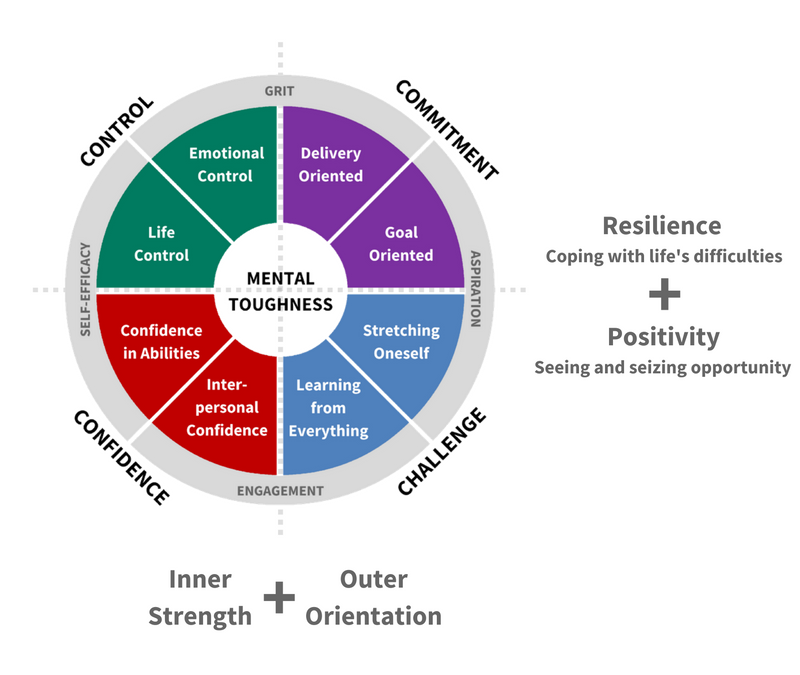
The 4 Pillars of Mental Toughness
1) Commitment
Meaning: Doing what you said you’d do especially when it’s inconvenient.
Try this: Choose one daily micro-action (5–10 minutes) and protect it for 7 days.
2) Control
Meaning: Managing your energy, attention, and reactions.
Try this question: “What is within my control right now?”
3) Challenge
Meaning: Viewing pressure as “training,” not danger.
Reframe: Instead of “This is too much,” try “This is building my capacity.”
4) Confidence
Meaning: Trusting your ability to handle what comes next.
Build it by evidence: Keep a short “wins list” even small wins count.
Your Next Step: Take the Mental Toughness Assessment
Real progress becomes faster when you understand your personal mental toughness profile.
The assessment helps you discover:
Which of the 4 pillars are strongest for you right now
Where pressure affects you most (e.g., uncertainty, setbacks, conflict, workload)
The habits that will make the biggest difference for your confidence and performance
Clear, personalized development actions (not generic advice)
Why take it?
Because mental toughness isn’t one-size-fits-all. Two people can face the same challenge and react completely differently and the assessment shows you why. Ready to go deeper? Take the Mental Toughness Assessment to learn your profile.
Stay Connected
If you’d like us to share the assessment link, your next steps, and follow-up resources, leave your details below